is negligibly
small. Thus, at most scales of cosmological interest, Equation (54) is well approximated as
For a given set of cosmological parameters, one can solve the above equation by substituting the expansion
law for
is negligibly
small. Thus, at most scales of cosmological interest, Equation (54) is well approximated as
For a given set of cosmological parameters, one can solve the above equation by substituting the expansion
law for  as described in Section 2.3. Since Equation (55) is the second-order differential equation
with respect to
as described in Section 2.3. Since Equation (55) is the second-order differential equation
with respect to  , there are two independent solutions; a decaying mode and a growing mode
which monotonically decreases and increases as
, there are two independent solutions; a decaying mode and a growing mode
which monotonically decreases and increases as  , respectively. The former mode becomes
negligibly small as the Universe expands, and thus one is usually interested in the growing mode
alone.
, respectively. The former mode becomes
negligibly small as the Universe expands, and thus one is usually interested in the growing mode
alone.
More specifically those solutions are explicitly obtained as follows. First note that the l.h.s. of
Equation (18) is the Hubble parameter at  ,
,  :
:
) with respect to  yields
and
respectively. Thus the differential equation for
yields
and
respectively. Thus the differential equation for  reduces to
This coincides with the linear perturbation equation for
reduces to
This coincides with the linear perturbation equation for  , Equation (55). Since
  is a decreasing
function of
is a decreasing
function of  , this implies that
  is the decaying solution for Equation (55). Then the corresponding
growing solution
is the decaying solution for Equation (55). Then the corresponding
growing solution  can be obtained according to the standard procedure: Subtracting Equation (55)
from Equation (60) yields
and therefore the formal expression for the growing solution in linear theory is
It is often more useful to rewrite
can be obtained according to the standard procedure: Subtracting Equation (55)
from Equation (60) yields
and therefore the formal expression for the growing solution in linear theory is
It is often more useful to rewrite  in terms of the redshift
  as follows:
where the proportional factor is chosen so as to reproduce
as follows:
where the proportional factor is chosen so as to reproduce  for
for  . Linear growth
rates for the models described in Section 2.3 are summarized below:
. Linear growth
rates for the models described in Section 2.3 are summarized below:
 ):
):
 ):
):
 ):
):
For most purposes, the following fitting formulae [67 ] provide sufficiently accurate approximations:
 and
and  refer to the present values of the density parameter and the dimensionless
cosmological constant, respectively, which will be frequently used in the rest of the review.
refer to the present values of the density parameter and the dimensionless
cosmological constant, respectively, which will be frequently used in the rest of the review.
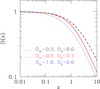
Figure 2 shows the comparison of the numerically computed growth rate (thick lines) against the above
fitting formulae (thin lines), which are practically indistinguishable.
shows the comparison of the numerically computed growth rate (thick lines) against the above
fitting formulae (thin lines), which are practically indistinguishable.
 |
 |
 |
| http://www.livingreviews.org/lrr-2004-8 |
© Max Planck Society and the author(s)
Problems/comments to |

![( Ωm 1 − Ωm − Ω Λ ) H2 = H20 --3-+ -------2----- + Ω Λ (56 ) [ a a ] = H20 Ωm (1 + z)3 + (1 − Ωm − Ω Λ)(1 + z)2 + Ω Λ . (57 )](article173x.gif)



![d da2 d [ d ( D ) ] a2--(D˙H − D ˙H ) + ---(D˙H − D ˙H ) = -- a2H2 -- --- = 0, (61 ) dt dt dt dt H](article184x.gif)





![g(z) D (z) = ------, (67 ) 1 + z 5Ω-(z)---------------------1-------------------- g(z) = 2 Ω4 ∕7(z ) − λ (z ) + [1 + Ω(z)∕2][1 + λ(z)∕70], (68 )](article197x.gif)
![[ ]2 3 Ω (z) = Ωm (1 + z)3 -H0-- = ---------------Ωm-(1 +-z)----------------, (69 ) H (z) Ωm (1 + z)3 + (1 − Ωm − ΩΛ )(1 + z)2 + Ω Λ [ H ]2 Ω λ(z) = ΩΛ ---0- = ----------3----------Λ------------2------. (70 ) H (z) Ωm (1 + z) + (1 − Ωm − Ω Λ)(1 + z ) + Ω Λ](article198x.gif)